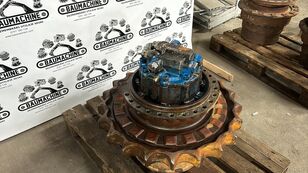
Moteur de translation HMGC16 pour midi pelle Hitachi EX120-2 EX120-3


Si vous décidez d'acheter un véhicule ou du matériel à bas prix, assurez-vous que vous communiquez avec un vendeur réel. Cherchez autant d'informations sur le propriétaire que possible. Un escroc peut se faire passer pour une société réelle. En cas de doute, contactez-nous en utilisant le formulaire de commentaires afin que nous effectuions un contrôle supplémentaire.
Avant d'effectuer un achat, étudiez attentivement plusieurs offres de vente afin de connaître le coût moyen du modèle de véhicule ou d'équipement que vous avez choisi. Si le prix de l'offre qui vous intéresse est très inférieur aux offres similaires, réfléchissez bien. Une différence de prix considérable peut indiquer la présence de défauts cachés ou une tentative d'escroquerie.
N'achetez pas de produits dont le prix est trop différent du prix moyen de produits similaires.
Ne consentez pas à payer une caution ou une avance douteuse. En cas de doute, n’hésitez pas à demander des précisions, des photos et des documents supplémentaires, vérifier l'authenticité des documents ou encore poser des questions.
C'est l'arnaque la plus répandue. Des vendeurs malhonnêtes peuvent demander une avance sur le montant total pour « réserver » votre achat. De cette manière, ils peuvent recueillir un montant considérable, puis disparaître.
- Faire un prépaiement sur la carte
- N'effectuez pas de prépaiement sans établir de documents confirmant le transfert d'argent si le vendeur vous semble suspect au cours de vos échanges.
- Transfert de l'argent sur le compte séquestre
- Méfiez-vous de ce genre de demandes, il est très probable que vous soyez en train de communiquer avec un fraudeur.
- Virement sur le compte d'une société avec un nom similaire
- Soyez vigilant(e), des fraudeurs peuvent se faire passer pour des entreprises connues en introduisant des modifications mineures dans le nom. Ne transférez pas d'argent en cas de doute sur le nom de l'entreprise.
- Substitution de ses propres coordonnées dans la facture d'une entreprise réelle
- Avant d'effectuer le virement, vérifiez que les coordonnées indiquées sont exactes et qu'elles appartiennent à l'entreprise indiquée.
Coordonnées du vendeur

 +86 189 289...
+86 189 2896 5241


 Chine


 Chine


 Chine


 Chine

 Chine


 Chine


 Chine


 Chine

 Chine


 Chine


 Chine


 Chine


 Roumanie, Maramures
Product Overview
The EX120‑2 and EX120‑3 are the middle chapters in Hitachi's compact‑12 story — smaller cousins of the EX200, built for crews that need real dig depth without the weight of a 20‑ton machine. Decades on, these old Hitachis are still knocking around on small subdivisions, pond jobs and farm drainage, because they are simple to fix and forgiving on fuel. Under each track frame sits the HMGC16 axial piston motor and planetary reducer — the unit that turns pump flow into the slow, torque‑rich rotation pulling the 12‑ton frame across soft ground.
On an EX120 this age, the drive rarely dies suddenly. It wears down in stages: one track drifts on a straight, the track shell warms after a trundle, and a new hum works into the floor. Operators nurse it, but by the time a track hesitates on a bank, the piston block has already been shedding swarf into the oil. This aftermarket unit reproduces the HMGC16 as one sealed, bench‑run assembly, matching both the ‑2 and ‑3 builds, so the worn drive lifts out and the new one bolts straight in.
Core Advantages
1. Keeps a legacy 12‑ton machine earning
Original HMGC16 drives for the ‑2 and ‑3 builds grow scarcer every year. This aftermarket unit gives owners a path to keep a still‑useful old Hitachi on the job rather than writing it off over a dead track.
2. Simple, tough gearing that wears slowly
The HMGC layout has none of the complexity of later drives — just hardened planetary teeth meshing cleanly. No electronics to fail, no sensors to blame, just gears that last when kept sealed.
3. Even pull between the two tracks
A lapped piston block and valve plate hold pressure internally, so neither track lags. The machine tracks straight across a yard without the operator fighting a sideways tug.
4. Sealed against mud and dust of small‑site work
Old EX120s work through long days in muddy yards, puddles and dust. Fresh shaft and housing seals keep that grit out of the lube — the protection that decides whether the drive reaches its next overhaul.
5. A direct, no‑nonsense fit
Flange, studs and ports reproduce the original, so removal and refitting follow the old Hitachi manual. No adapters, no fabrication, no guessing.
Manufacturing & Quality Control
Components are machined to the original HMGC drawing, heat‑treated where wear bites, and assembled in a clean area. Each finished drive runs on a hydraulic stand while torque, leakage and noise are checked; units outside tolerance are reworked before packing. The internals are fogged with preservation oil, ports are plugged, and the unit is crated on dunnage for freight.
Frequently Asked Questions
Q1: How do the ‑2 and ‑3 drives differ?
A: The HMGC16 platform is shared across both builds, with minor internal changes over the production run. Send the machine serial number and we confirm the exact internal spec before dispatch.
Q2: Can this replace an earlier EX120‑1 drive?
A: Physically the HMGC16 family is very close, but port orientation and output spline can differ between builds. Send photos of the old drive and we will tell you honestly whether it is a straight swap.
Q3: What is the usual turnaround for an old EX120 owner?
A: Stocked units leave within days. Once it arrives, a home workshop with a track lift can often do the swap over a weekend — these old Hitachis are built to be serviced.
Q4: Do you sell just the internals if I can reuse the housing?
A: The listing is the complete assembly. If you are repairing rather than replacing, ask about piston kits, valve plates and gear sets — we can usually supply them separately.
Q5: How should I store the spare drive?
A: Keep it sealed in its crate, off the concrete and out of weather. The preservation oil and plugged ports protect the internals for months — do not unwrap until you are ready to fit.