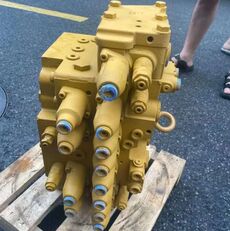
Distributeur hydraulique 259-7400 2597400 pour midi pelle Caterpillar 330DL


Si vous décidez d'acheter un véhicule ou du matériel à bas prix, assurez-vous que vous communiquez avec un vendeur réel. Cherchez autant d'informations sur le propriétaire que possible. Un escroc peut se faire passer pour une société réelle. En cas de doute, contactez-nous en utilisant le formulaire de commentaires afin que nous effectuions un contrôle supplémentaire.
Avant d'effectuer un achat, étudiez attentivement plusieurs offres de vente afin de connaître le coût moyen du modèle de véhicule ou d'équipement que vous avez choisi. Si le prix de l'offre qui vous intéresse est très inférieur aux offres similaires, réfléchissez bien. Une différence de prix considérable peut indiquer la présence de défauts cachés ou une tentative d'escroquerie.
N'achetez pas de produits dont le prix est trop différent du prix moyen de produits similaires.
Ne consentez pas à payer une caution ou une avance douteuse. En cas de doute, n’hésitez pas à demander des précisions, des photos et des documents supplémentaires, vérifier l'authenticité des documents ou encore poser des questions.
C'est l'arnaque la plus répandue. Des vendeurs malhonnêtes peuvent demander une avance sur le montant total pour « réserver » votre achat. De cette manière, ils peuvent recueillir un montant considérable, puis disparaître.
- Faire un prépaiement sur la carte
- N'effectuez pas de prépaiement sans établir de documents confirmant le transfert d'argent si le vendeur vous semble suspect au cours de vos échanges.
- Transfert de l'argent sur le compte séquestre
- Méfiez-vous de ce genre de demandes, il est très probable que vous soyez en train de communiquer avec un fraudeur.
- Virement sur le compte d'une société avec un nom similaire
- Soyez vigilant(e), des fraudeurs peuvent se faire passer pour des entreprises connues en introduisant des modifications mineures dans le nom. Ne transférez pas d'argent en cas de doute sur le nom de l'entreprise.
- Substitution de ses propres coordonnées dans la facture d'une entreprise réelle
- Avant d'effectuer le virement, vérifiez que les coordonnées indiquées sont exactes et qu'elles appartiennent à l'entreprise indiquée.
Coordonnées du vendeur

 +86 189 289...
+86 189 2896 5241


 Chine


 Chine


 Roumanie, Maramures
Product Overview
A 330DL running a hydraulic breaker lives a different hydraulic life from one that only digs. The breaker circuit is fed through the auxiliary section of the main valve, and every hammer blow sends pressure spikes back through that section — thousands of them per shift. Add ripping work, or a machine that spends part of each week on shear or grapple duty, and the block accumulates wear in places a digging‑only machine never stresses.
That shows up in ways owners do not always connect to the valve. The breaker loses impact force gradually. The boom feels soft when carrying a loaded bucket after attachment work. Swing placement drifts. The auxiliary circuit starts behaving inconsistently, sometimes stalling, sometimes creeping. The cause is typically leakage past worn spools, made worse by spiked pressure in the auxiliary section. This OEM‑grade assembly replaces the block complete with fresh internals set to CAT values, so the worn unit comes off and the replacement fits the original port positions.
Core Advantages
1. Attachment duty stops eating the auxiliary section
Hammer and ripper work sends pressure spikes through one section repeatedly. Fresh spools and seals restore that section rather than leaving it as the weak point.
2. Breaker impact returns to full force
Weak impact is often blamed on the breaker itself. When the supply section leaks, the tool never receives its rated flow, and no amount of breaker servicing fixes that.
3. Digging performance comes back with it
Machines that hammer and dig both need consistent main circuits. Restored metering returns bucket bite after attachment work.
4. Swing and travel stop drifting
Restored circuit isolation ends the correction habit on both placement and tracking, which matters on heavy earthworks where seconds accumulate.
5. OEM build without dealer pricing
Original assemblies are expensive to import and slow to arrive. Equivalent clearances and tested settings at a fraction, with tiered pricing for fleets.
Manufacturing & Quality Control
Spool and bore pairs are machined to print tolerance, matched by size, and hand‑run‑in until full‑stroke movement is smooth without binding. Assembled blocks are flow‑tested circuit by circuit, including the auxiliary section, with relief values logged against 330DL figures; out‑of‑window units are stripped and corrected. Blocks ship internally oil‑fogged, ports capped, and crated on foam.
Frequently Asked Questions
Q1: My breaker feels weak — how do I know it is the valve and not the breaker?
A: Check supply flow and pressure at the auxiliary circuit under load. If flow falls short of the breaker's requirement, the valve is restricting it. If supply is correct, the breaker needs service.
Q2: Should the accumulator or breaker hoses be replaced at the same time?
A: Inspect them. Pressure spikes stress hoses and accumulators as much as the valve. Anything swollen, cracked or over‑aged should be replaced during the swap.
Q3: How do I confirm 259‑7400 suits my 330DL?
A: Send the tag from the existing valve plus the machine serial number. The two formats of the number are the same part, and we verify the configuration before dispatch.
Q4: Can my existing block be rebuilt?
A: If the casting is sound and has never been rebuilt, a kit may restore it. Where the auxiliary section and main circuits both leak, a complete assembly usually gives better service per dollar. Photos help us judge.
Q5: What hydraulic servicing belongs with installation?
A: Flush the system, renew the return filter, clean the suction strainer, and refill with specified oil. Hammer work produces fine debris that must not reach new clearances.
Q6: What is excluded from warranty?
A: Material and assembly faults are covered. Damage from dirty oil, water ingress, a spool forced against a bind, or reliefs altered outside specification is not. Photograph the crate before opening if damage is visible.